If the toys have taken over your house and you’re so over it, I’ve got you covered with these realistic ideas for organizing and storing all the toys – from the tiniest Barbie accessory to all the blocks, I’ll show you exactly how to organize everything once and for all.
I’ve been a stay at home mom for the last 10 years to my 3 girls.
Over the last decade I have learned a lot about what it takes to run a home successfully, including keeping things organized, so our home is a functional place for our family of five.
That being said, we have all gotten to the point where we’ve reached our limit on toys and things all over the house.
With birthdays, holidays, goodie bags, grandparents, Amazon and whathaveyou, toys just have a way of appearing in our homes and piling up.
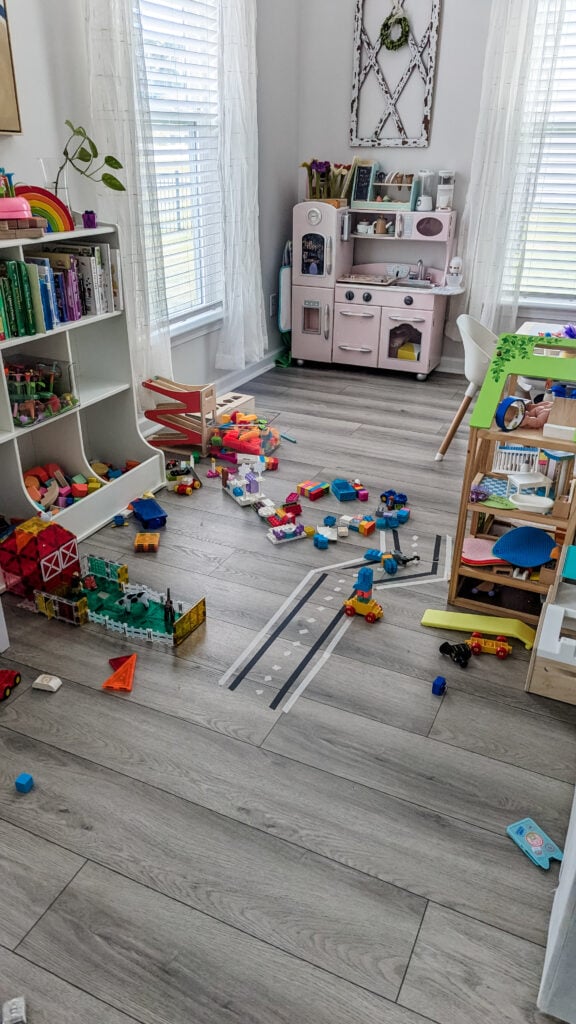
And like I said, if you’re so over it, today I’m going to teach you how to declutter, organize, and store all of the toys (games, puzzles, blocks, small pieces, etc.) so that clean up becomes an easy part of your family’s daily routine.
How to Organize Toddler Toys
My kids range in age from toddler to tween and all my kids have toys of their own as well as “shared” toys in the living room.
The toddler’s toys seem to require the most attention as they are naturally played with more throughout the day.
As my big kids have gotten older, it feels like there’s more of a need for small toy organization solutions (why do they have to be obsessed with Mini Brands?).
So with my kids’ age range I’ve tried and tested a lot of different ideas when it comes to organizing and storing toys.
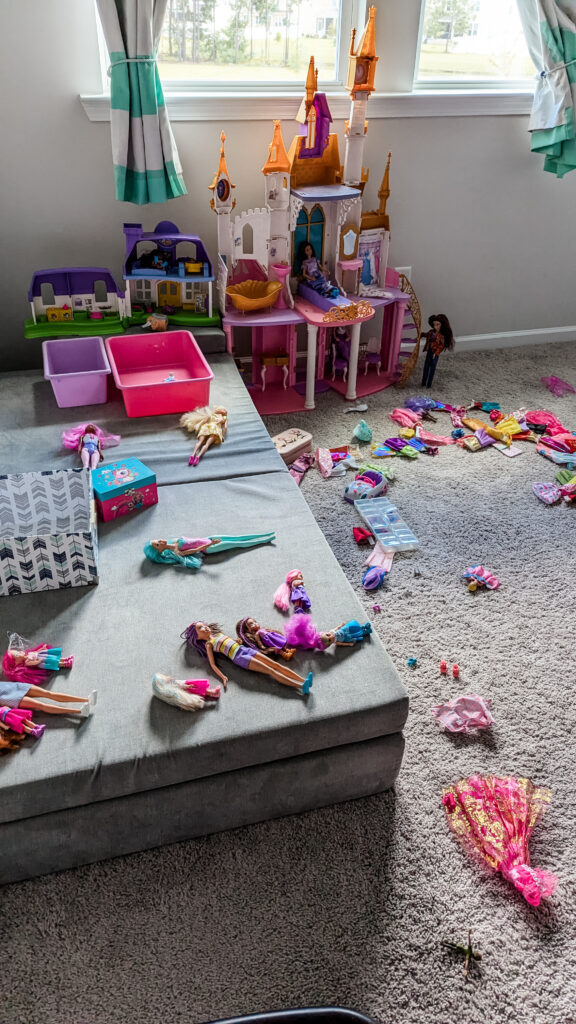
In this post we’ll chat about ideas for storing:
- Barbie accessories
- Legos/Duplos
- Blocks
- Cars
- Stuffed animals
- Books
- And more!
If you want to learn more about how I store our art supplies, you can find that, here.
You May Also Like:
- My Nightly Reset Routine
- 10 Minute Timer Decluttering Challenge
- How to Organize & Store Activity Supplies
- My Sunday Reset Routine
What we’re going to cover in this post:
- Toy storage ideas for small spaces (including stuffies)
- Small toy organization (accessories and tiny parts)
- Toy storage ideas for the living room or playroom
- Montessori-inspired toy organization
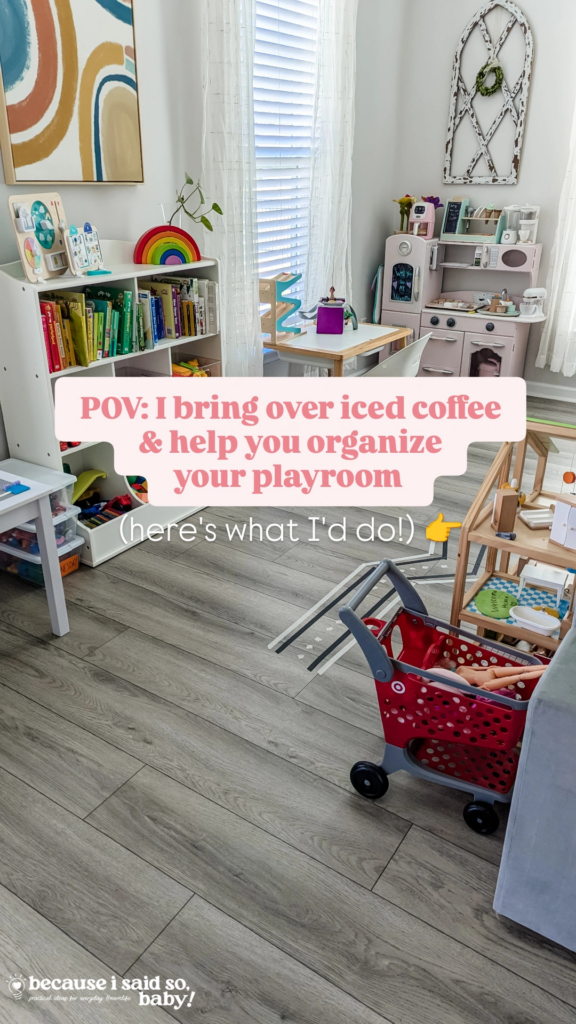
How To Organize & Store Toys
The first and very most important point: when it comes to toys, less is more.
More toys does not equal more play and kids often become overwhelmed with too many toys, which in turn leads to less play.
Before going to HomeGoods or Amazon and loading up on toy organizers, the first thing I would advise is to declutter the toys.
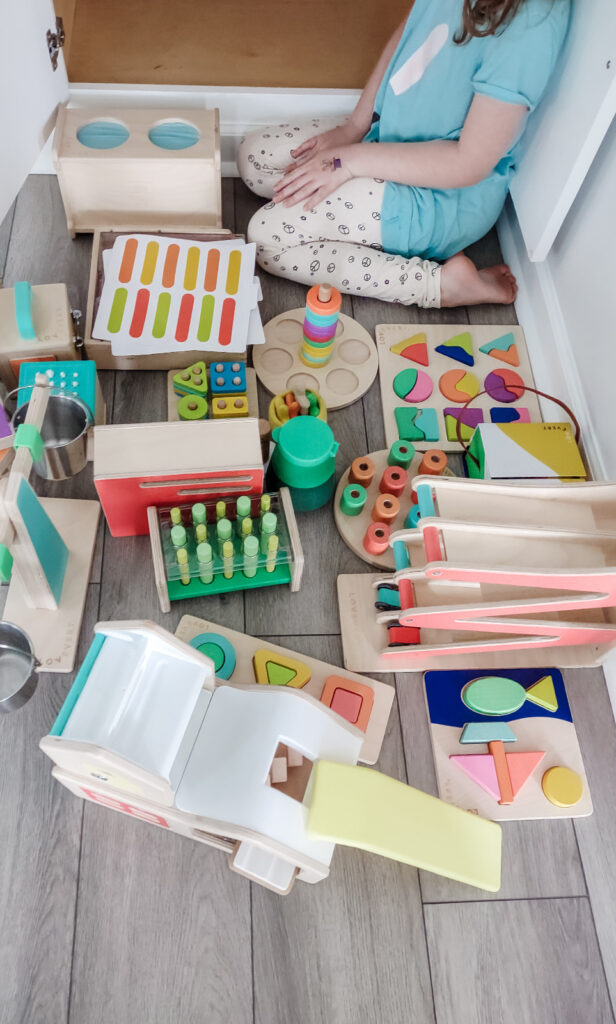
Here’s my step-by-step guide on How to Declutter Toys.
It’s much easier to organize all the toys when you’re starting with less.
- Start small: pick one room or area to declutter (for example: the playroom toy organizer or 1 kid’s closet
- Go space by space making bags to donate or pass on to a friend
- Do yourself a favor and put the bags right into the trunk of your car and cover them with a blanket or towel (so the kids don’t see)
I often find that my kids accumulate a lot of stuff, and it’s easy to weed out toys they haven’t touched in months and won’t be missed.
Sometimes it’s easier to declutter with your kids as part of the process and sometimes it’s better to wait until they’re out of the house and go through the process yourself.


After this step it will be much easier to organize everything!
We’re starting with less, and more importantly, finding storage solutions for the things that are played with and used most!
If this whole process is something you struggle with, there’s an entire module dedicated to decluttering and home organization in my Ultimate Stay at Home Mom Course.
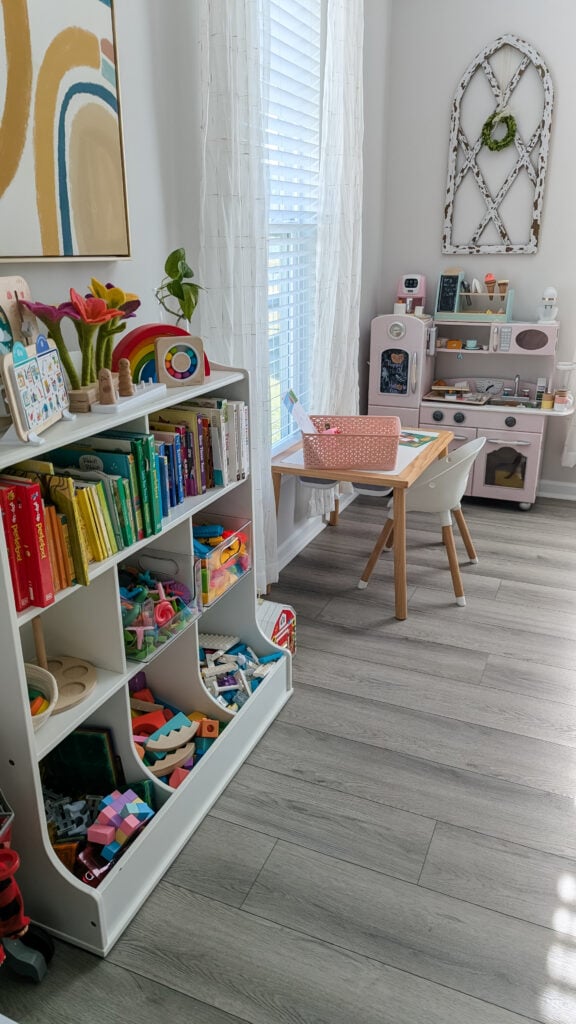
Toy Storage Ideas for Small Spaces
Working with a small space?
Maybe there’s no dedicated playroom or playspace but rather a bedroom, shared space, or closet.
In this case, I would use a multipurpose organizer that can hold books, toys, and stuffed animals all in one.
Below are a few examples of different cube-style organizers that will fit in small spaces and store various types of toys.
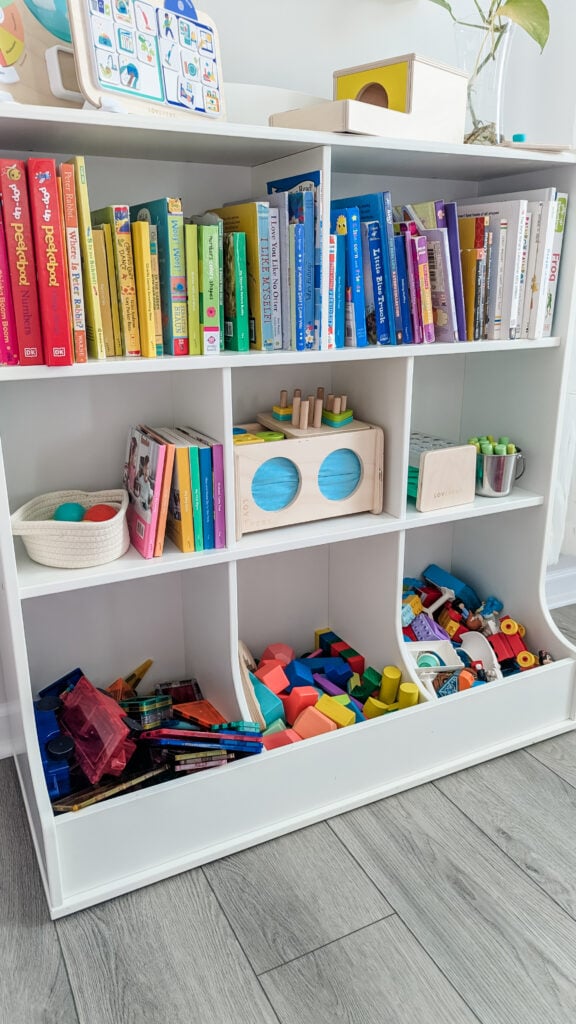
Book & Toy Organizer
I love the open shelving and how blocks, magnetic tiles and Duplos easily fit in the bottom compartments. These bottom spaces would also work for stuffed animals.
Below is an example of how to maximize a small space using a cube organizer.
By laying the organizer flat, rather than standing it up, it provides a play space on top, with storage on the bottom.
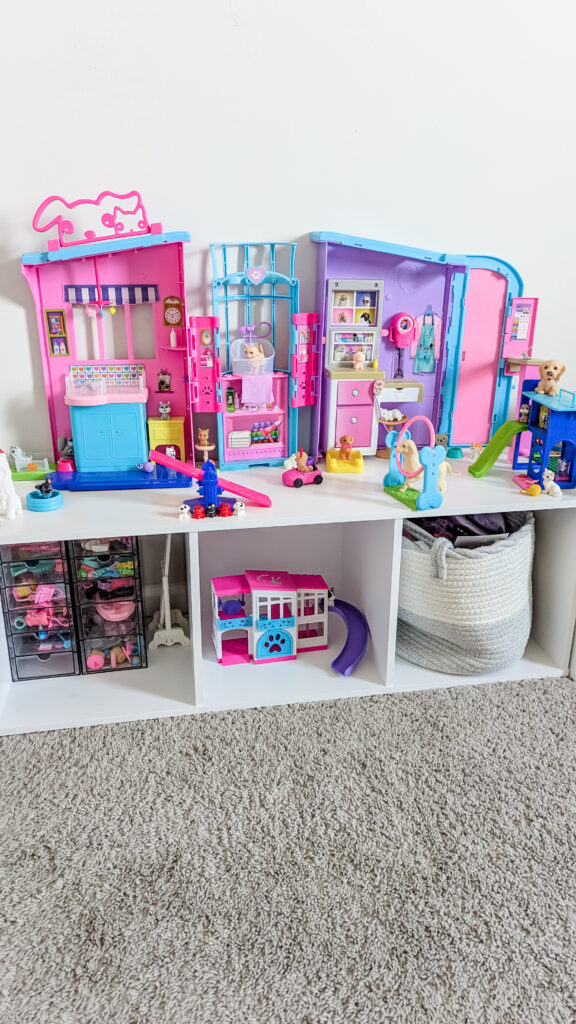
Find all of my favorite cube organizers on Amazon.
In order to make use of a small space, I also love using over-the-door organizers.
Here are two different ones I have tried, one is meant for stuffed animals, and the other could really be used for whatever you want!
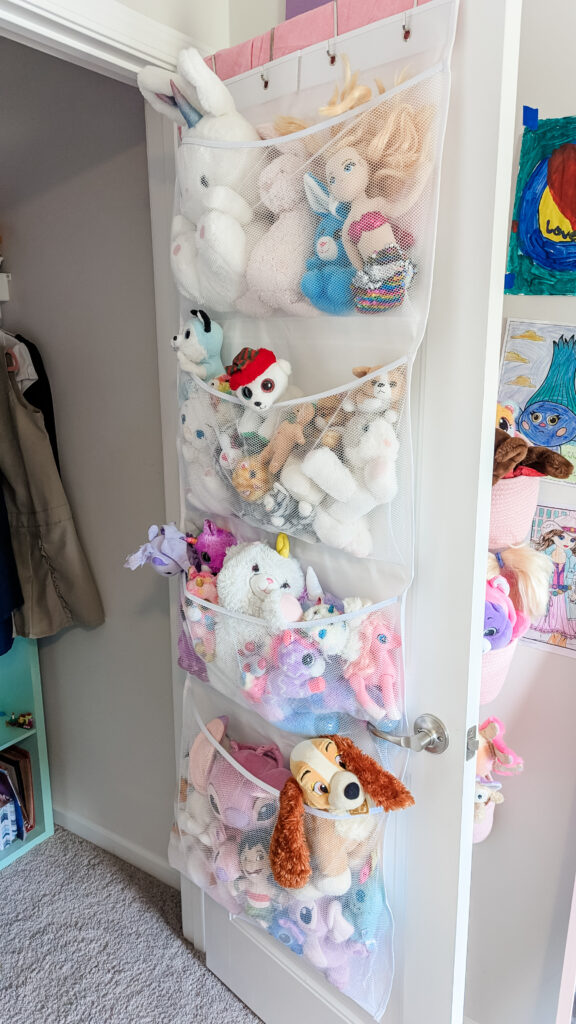
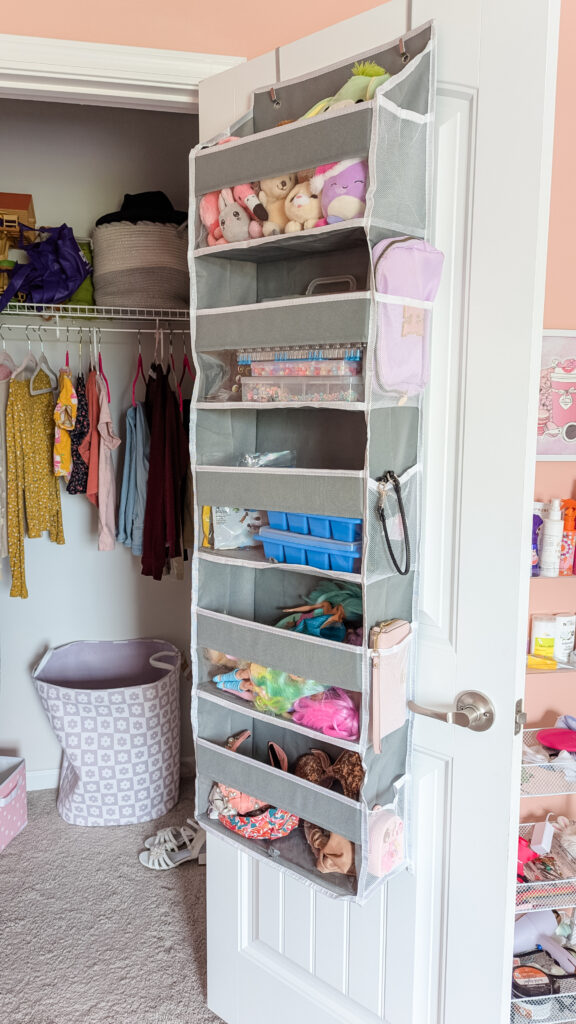
Shop: Stuffed Animal Organizer / Over-the-door Organizer
Small Toy Organization & Storage
I used to think toddler toys had a lot of pieces but as my kids have gotten older I have learned that big kid toys have even more (tiny) pieces.
My absolute favorite storage solution for all the tiny pieces is actually a clear drawer set.
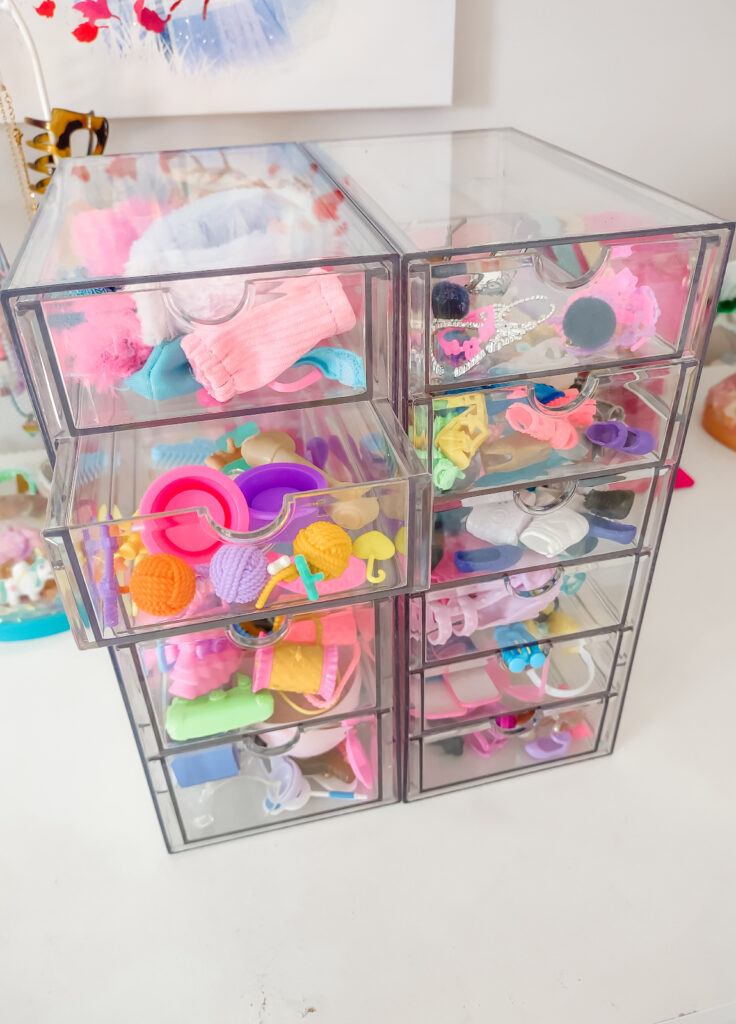
Acrylic Drawer Set
Perfect for tiny doll accessories, Legos, or even non-toy items like hair bands, clips, etc.
You can see what’s inside and the set shared here has different size drawers.As a bonus this set can also fit inside a cube organizer or on top of their desk or dresser.
Below are other ways to store small toys or toys with a lot of pieces.
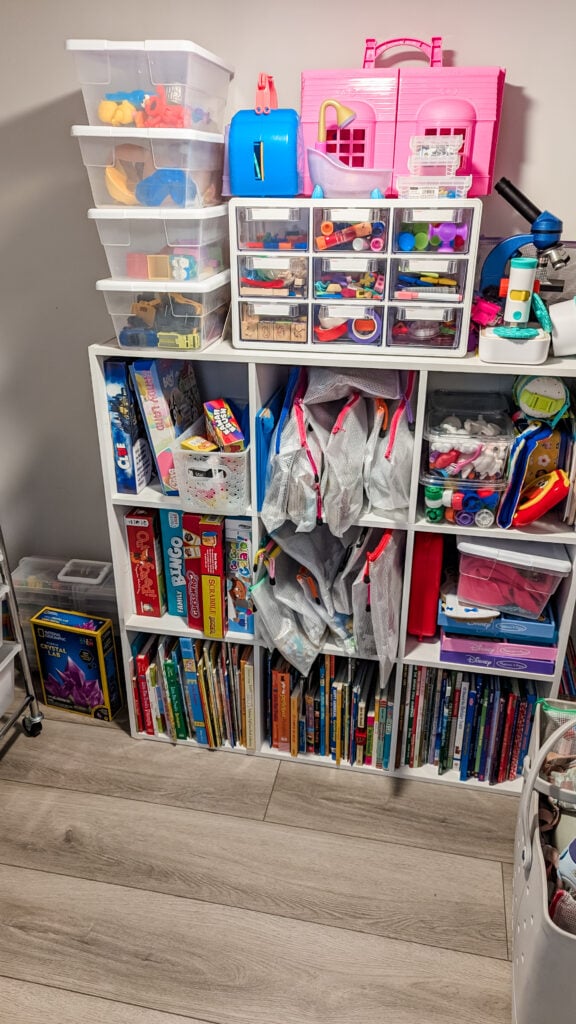

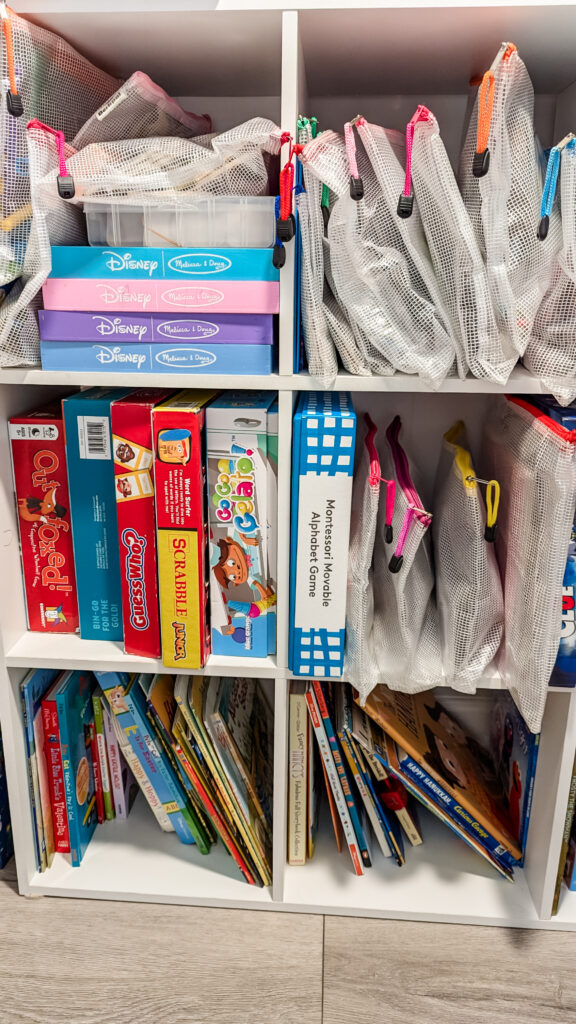
Left: Small Storage Drawers for tiny toys or supplies / Mesh Bags for puzzles and games (middle row of organizer)/ Right: Shoebox-size bins for toys with a lot of pieces and to organize toys by type
How to Store Legos
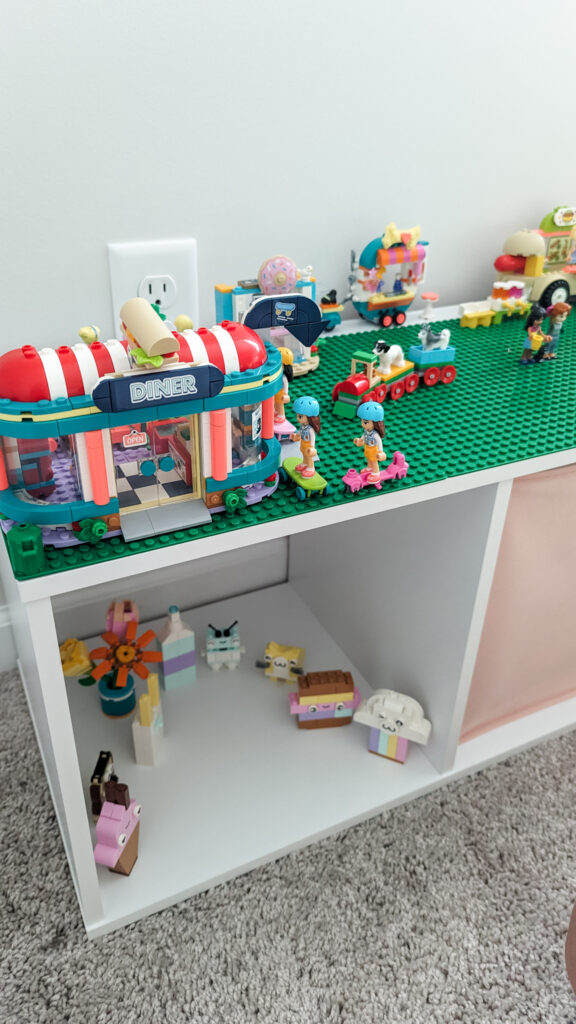
Shop my DIY Lego Table Supplies – for this I also use a cube organizer and turn it on it’s side (rather than standing it upright).
The peel & stick base-plates go on top, and storage drawers go inside the cubes. These are the storage drawers I use.
How to Store Tonies
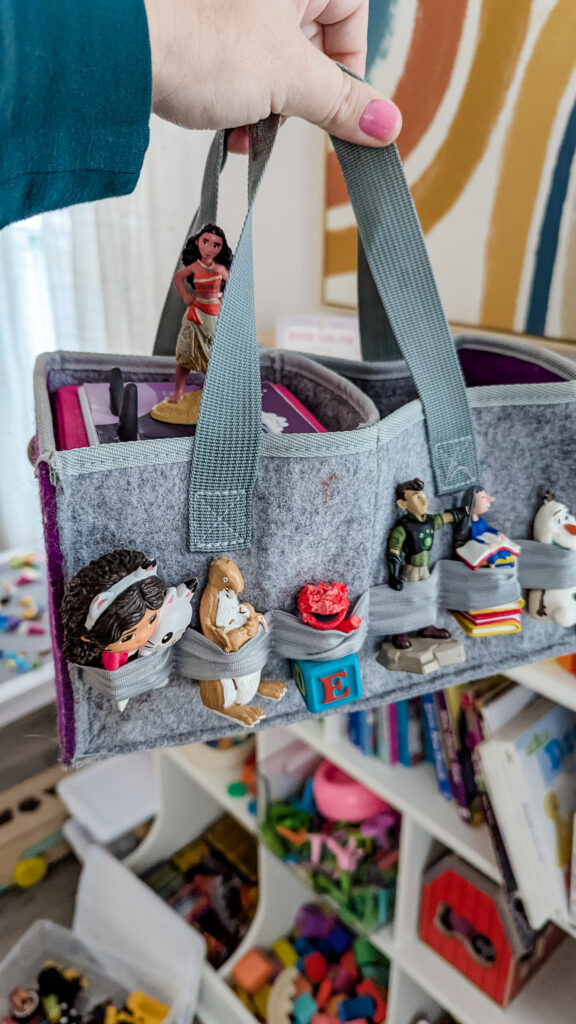
Please ignore the Elmo head that one of our dog’s ate 😂
This is my favorite solution for storing all of our Tonies.
- The bag holds Tonies around the outside and inside the bucket
- It holds the Tonie box as well
- Toddlers can carry the bag around with them
- Keeps everything contained
Toy Storage Ideas (Living Room or Playroom)
While you don’t need a dedicated playroom, it does help to have dedicated storage for your toys if they’re in a shared living space.
This can look like:
- Baskets underneath the coffee table
- Toys stored in a TV cabinet unit
- Dedicated shelf/toy storage unit
- Toy chest in the living room

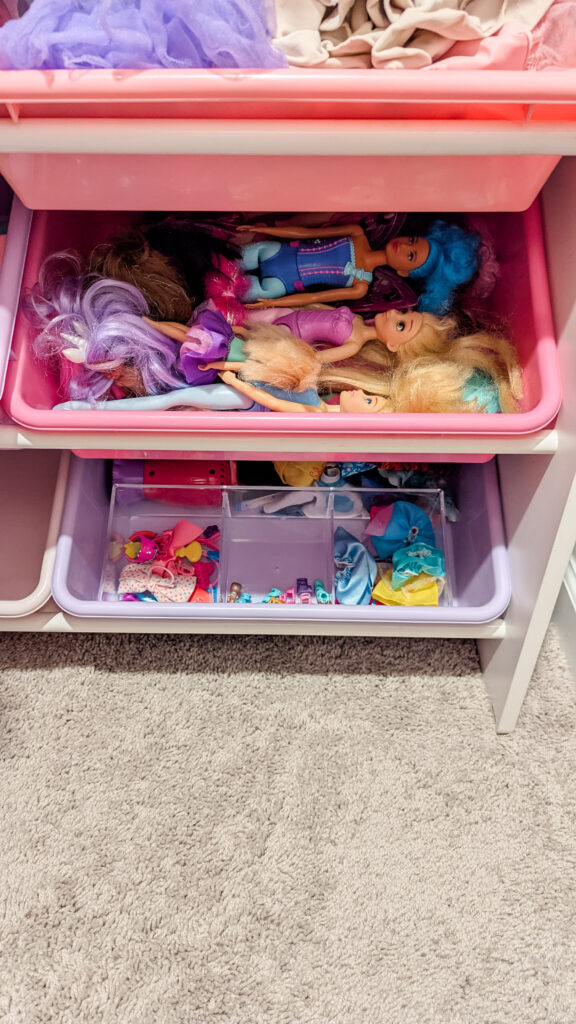
Whether you’re able to have a specific playroom or a shared space like a basement or family room, it’s helpful to have a “home” for the toys and books as this makes cleanup so much easier.
Here are a few toy organization and storage ideas for your main playspace:

Shop my Playroom
Our playroom is actually a shared living room space with the couch and TV! The main toy organizer stores things like blocks and Duplos and there are more toys inside the TV cabinet.
Here are some more ideas for storing toys in the family room:
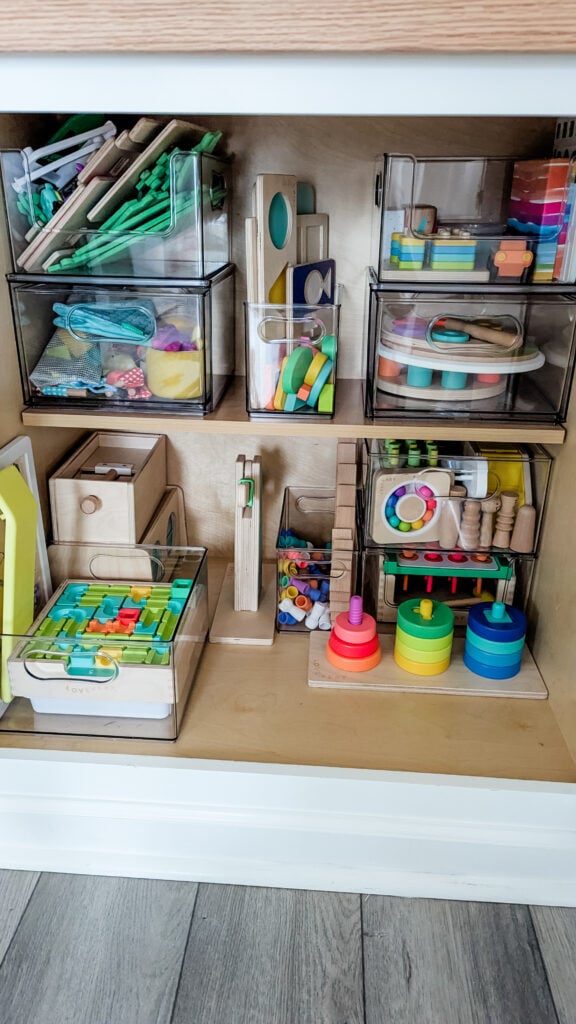

Left: toys stored in a cabinet in the TV unit / Right: toys stored on a bookshelf inside bins
Mom-to-Mom Tip
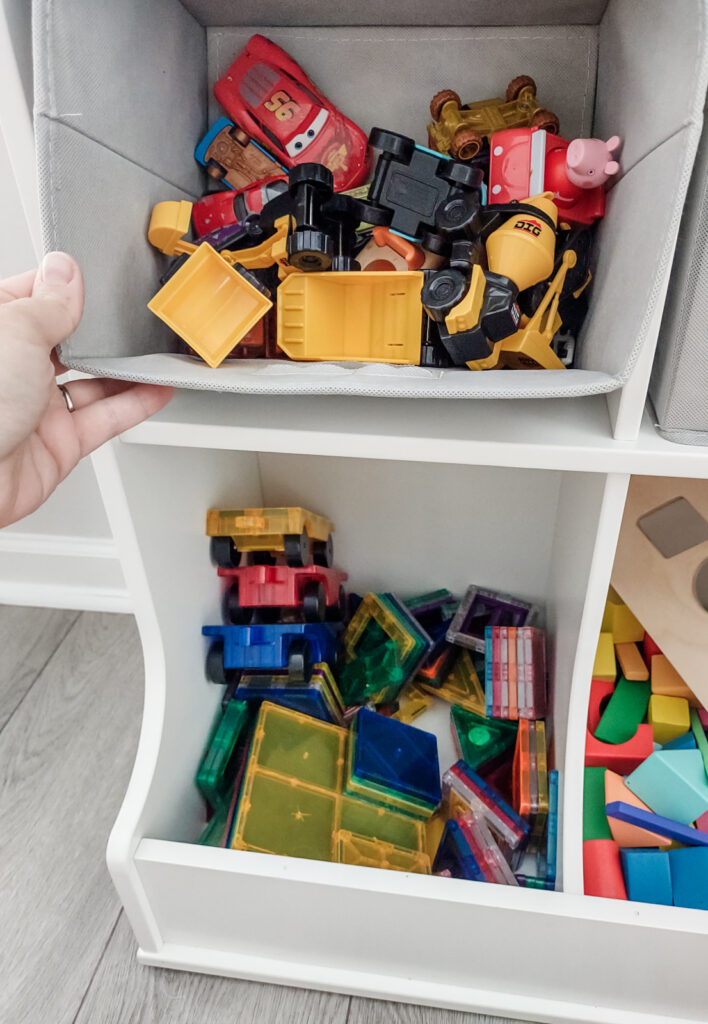
I like to use the bins and sections above to organize toys by type. This makes cleaning up easier and also allows you to see how many or how much of each type of toy you have. As you’ll see above, I have toy cars in one bin and magnetic tiles and blocks in the sections below.
Montessori-Inspired Toy Organization
With Montessori, the main purpose is for learning and exploration to be child-led.
This means that toys and materials are available on a low, child-height shelf (where they don’t need to ask for help reaching for anything).
- Toys are set out disassembled (meaning puzzle pieces are next to the puzzle board, a stacking toy has the blocks next to it, rather than assembled)
- Materials offered are open-ended (the most common are wooden toys that don’t have a specific script or prompt for play)
- Lovevery toys are probably the best mass-market example of what Montessori toys and materials can look like!
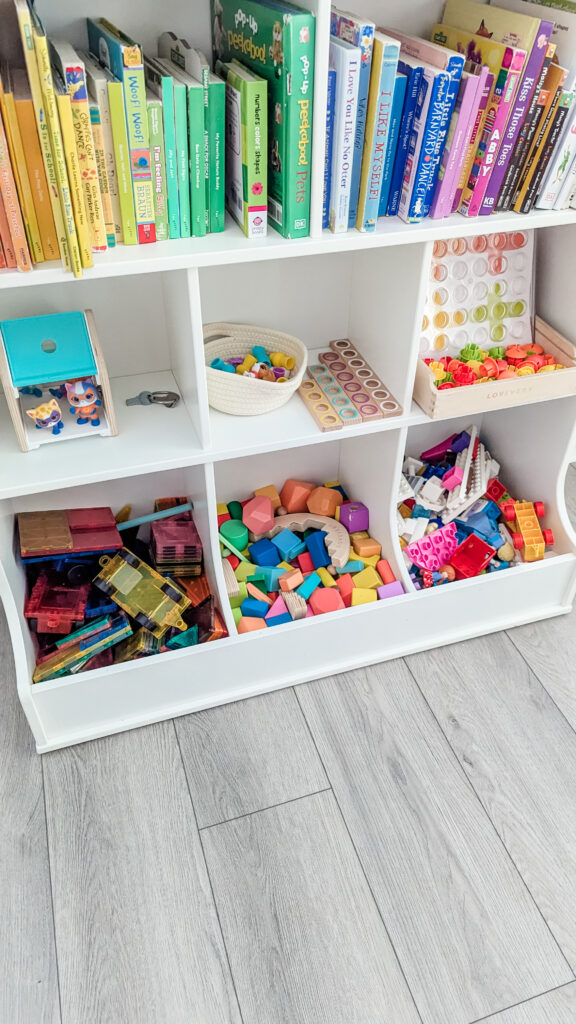
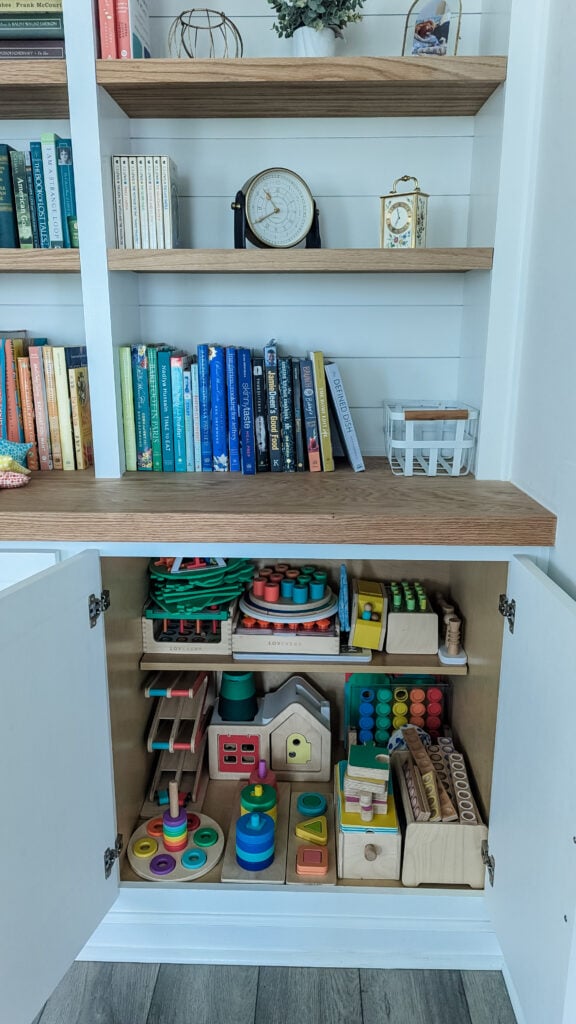
Left: the toys in the middle row, in the center and on the right square, you can see how they are “disassembled” to encourage the child to complete the puzzles, and add the pieces / Right: Montessori toys stored in a cabinet to be taken out as needed.
If you’re interested in this learning style it’s helpful to think of their playspace like a workspace.
How can you arrange toys and materials so they can do their best “work?”
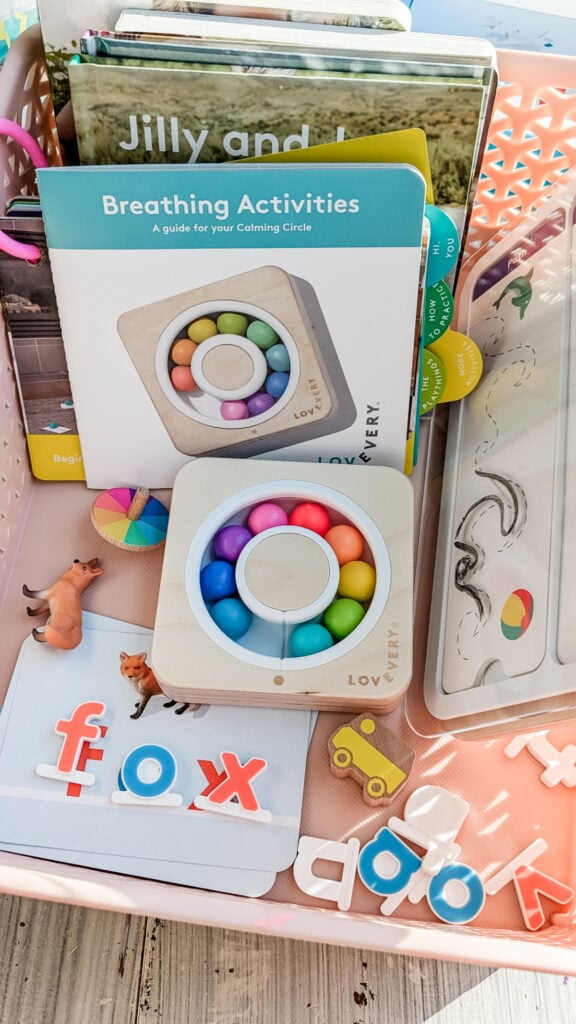
This might look like a rolling cart next to a low table where they can get their own supplies to create or play.
I’ve saved some of my favorite Montessori finds on Amazon to a list to help give you an idea of how you can set up this type of playspace for your child.
Montessori Book Storage
As I mentioned earlier, with Montessori, the aim is to keep materials child-height and easily accessible.
Which is why we love this wooden bookshelf from Piccalio for its functionality and design!
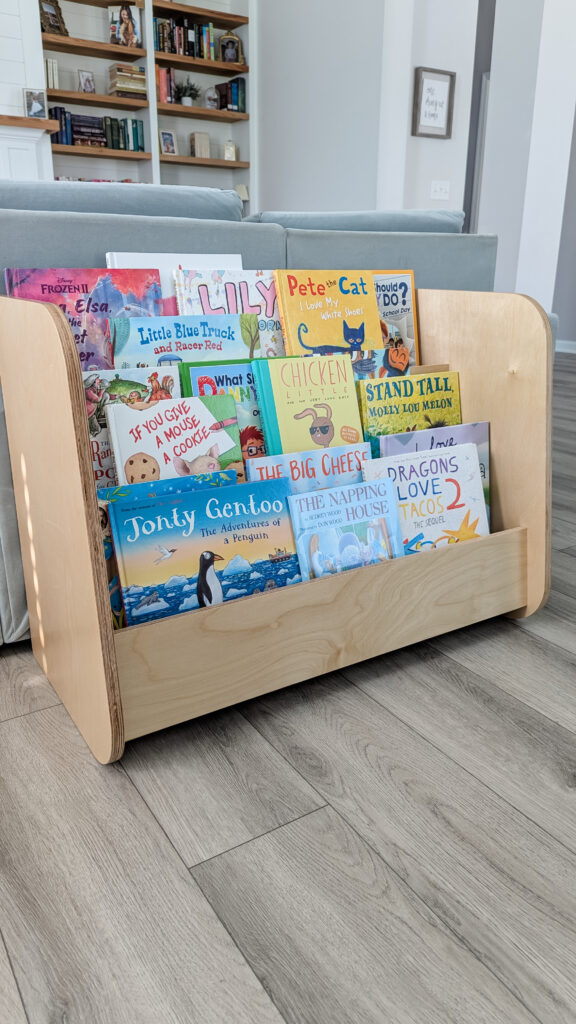
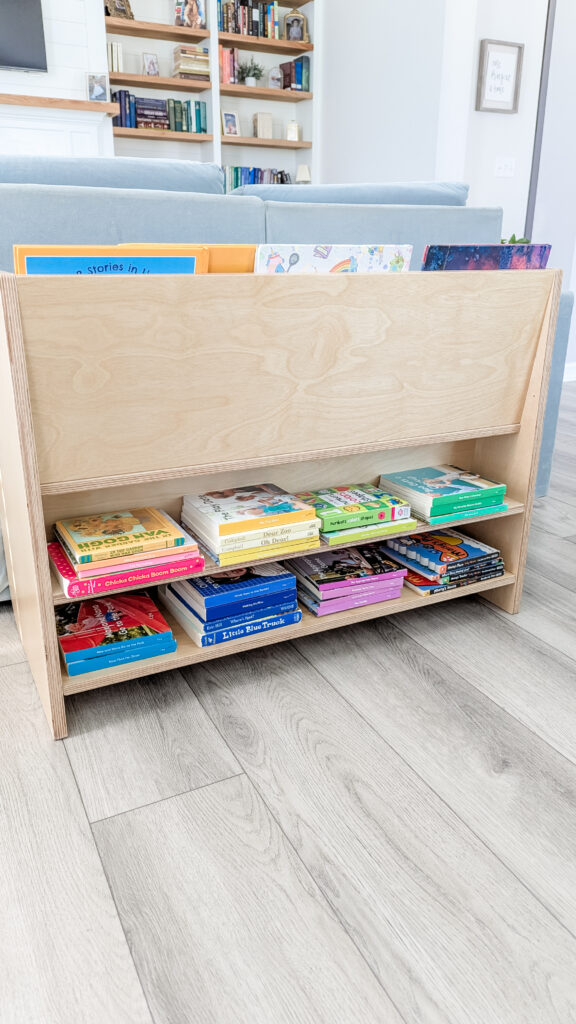
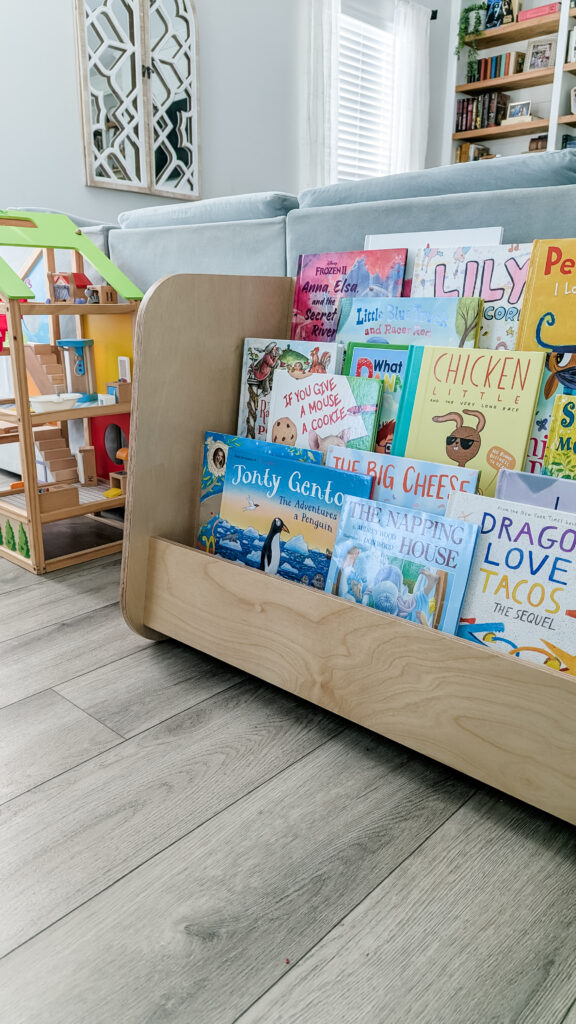
One thing I love about this bookshelf is that the titles of the books face outward, so little ones can easily choose a book to read, and then put it back once they’re done!
There is also a storage compartment along the back where you can store smaller board books, or additional picture books (pictured above right).
For a true Montessori shelf, you’ll only want to put a few books out at a time, and rotate them every few weeks.
I included a good amount of books above so you can get an idea of how big the bookshelf is, including the storage in the back.
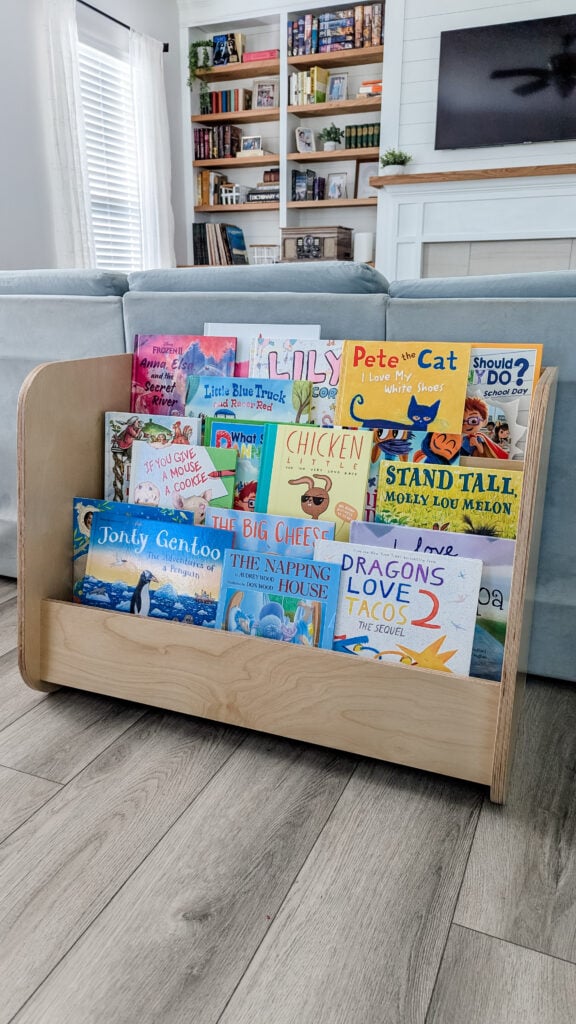
Thank you to Piccalio for gifting us this beautiful bookshelf for our playroom!
Shop all of my Home Organization here!
What to Read Next:
- 3 Year Old Preschool Activities
- 10 Minute Timer Decluttering Challenge
- 4 Year Old Homeschool Routine
- How to Organize Activity & Craft Supplies
Follow Marla on Instagram for more practical ideas for everyday #momlife
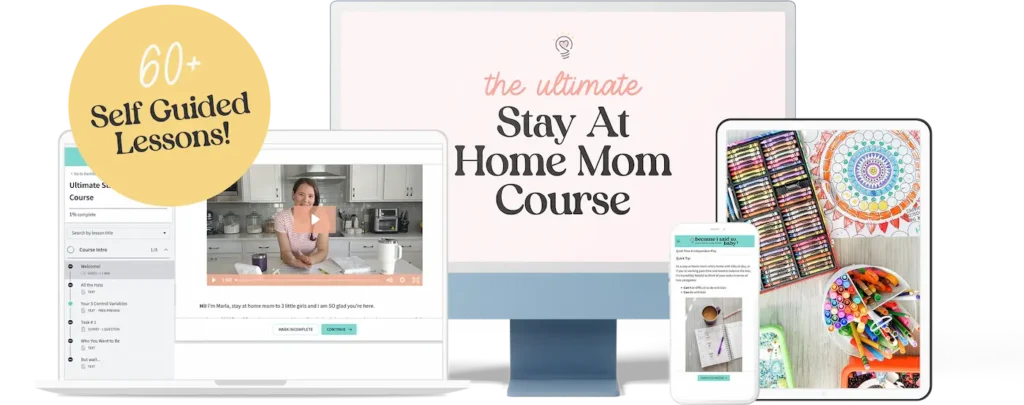
The Ultimate Stay at Home Mom Course
Learn exactly how to implement simple systems and routines to take your stay at home mom life from total chaos to calm, confident, and in control.